
- Open 24/7, Monday to Sunday
- Serving Crawford County
Common Kalkaska projects
Match the dumpster to the work at hand
Kalkaska cleanup work is easier to plan when the container matches both the material and the property. These common uses cover seasonal turnover, home projects, and local construction conditions without pushing you into a larger dumpster than necessary.
Household Cleanout Dumpsters
For Kalkaska cabin turnover, inherited household contents, or a move-related cleanout. Separate appliances, paint, tires, and other restricted materials before loading so the approved material list stays clear.
Cabin turnoverGarage and Basement Cleanup
Older Kalkaska homes and seasonal properties often collect stored furniture, boxes, shelving, and damaged flooring. Keep the approach open and protect the driveway edge where sloped access can complicate placement.
Stored household debrisYard Waste Dumpsters
Spring and fall work around Kalkaska lots may include branches, brush, and storm cleanup. Ask about material limits before mixing yard debris with soil, stumps, or treated lumber.
Seasonal yard workHome Renovation Dumpsters
Bathroom, kitchen, flooring, and roofing projects in Kalkaska need room for bulky debris and a delivery path that will not interfere with the home entrance or contractor staging.
Renovation debrisRoofing Debris Dumpsters
Roof work on Kalkaska homes and cabins produces dense, awkward loads. Keep shingles inside the container, avoid overfilling, and discuss driveway grade before the truck arrives.
Roof replacementConcrete and Heavy Debris
Concrete, block, brick, and similar materials require careful size and loading guidance in Kalkaska. Heavy debris can exceed practical limits quickly, so describe the material before choosing a container.
Heavy material planning
Kalkaska job conditions
Kalkaska properties need careful container placement
Kalkaska properties vary from older homes near established streets to seasonal cabins on wooded, sloped lots. That changes how a dumpster can be delivered. A driveway may look wide enough at the ground but narrow near the garage, mailbox, or a low branch. On a hill, the truck needs a stable approach and a placement area that will not let the container shift while loading. Kirstyn Dumpster Rental discusses the access route before scheduling, including surface type, grade, overhead clearance, and whether a trailer or parked vehicle will need to move.
Seasonal cabin turnover creates a different loading pattern from a typical home renovation. Owners may be clearing furniture, damaged flooring, storm debris, old appliances, and accumulated household material in one visit. Kalkaska weather can make soft ground, wet shoulders, and thawing driveways poor choices for a heavy container. A firm gravel pad or paved area is usually better than placing equipment on saturated grass. Tell us if the property is vacant, accessed by a private lane, or reached through a shared drive so the delivery plan matches the site.
Kalkaska also has working commercial areas, service properties, and homes spread beyond the denser parts of town. Deliveries near a busy road, shared parking area, or narrow access lane require more than choosing a container size. The placement must leave room for normal traffic and provide a straight enough approach for loading and removal. Trucks come from Grayling, and the route discussion helps identify road grades, seasonal access concerns, and practical staging space before the delivery is put on the schedule.
Before delivery
Prepare your Kalkaska property for the truck
- Measure the Kalkaska driveway width and identify low branches, parked vehicles, gates, and steep approach points.
- Choose a firm, level placement area instead of saturated grass, soft shoulders, or thawing gravel.
- Separate restricted materials from renovation debris before loading the Kalkaska dumpster.
- Keep shared drives, roadside sightlines, and cabin access clear for delivery and pickup.
- Tell Kirstyn Dumpster Rental about snow, mud, seasonal vacancy, or private-lane conditions before scheduling.
Weather and scheduling
Kalkaska seasons change how dumpsters are placed
Kalkaska winters bring freeze, snow, and repeated thaw cycles that can turn a previously firm shoulder into soft ground. A container placed too close to a driveway edge may settle or become difficult for the truck to retrieve. Snowbanks can also reduce the usable approach width, while ice changes braking and turning conditions on sloped drives. In spring, wet soil and thawing gravel deserve the same attention. Placement on pavement or a solid, level base is often the safer choice. Share the surface, slope, and expected weather conditions before delivery so the crew can plan around the property rather than discovering the problem at the gate.
Summer cabin activity and fall turnover can create concentrated cleanup periods across Kalkaska. Storms may leave branches and scattered material around a property, while autumn rain makes lawns and unpaved lanes less dependable for heavy equipment. Keep the loading area clear of vehicles, stacked lumber, low limbs, and loose tarps. Do not fill above the rim or place dense debris on one side, because an uneven load creates handling problems. If weather changes after scheduling, update the site details before the truck is dispatched. A later delivery can be more sensible than rutting a yard or blocking a shared drive.
Kalkaska dumpster questions
Answers for local delivery and loading concerns
What size dumpster do I need for a Kalkaska cabin cleanout?
A 10 Yard or 15 Yard container often suits a smaller Kalkaska cabin cleanout, while a larger home turnover may need a 20 Yard or 30 Yard option. The right choice depends on furniture, flooring, appliances, and access. Describe the property, debris, and available placement area before scheduling so the container is not undersized or unnecessarily large.
Can a dumpster go on a sloped Kalkaska driveway?
A dumpster can sometimes be placed on a gently sloped driveway, but the truck needs a stable approach and a location that keeps the container secure during loading. Steep grades, soft edges, ice, and tight turns can change the plan. Tell us the driveway surface, slope, and clearance, then move vehicles and loose items before delivery.
How does winter weather affect dumpster delivery in Kalkaska?
Winter weather can narrow access with snowbanks, hide driveway edges, and make frozen or thawing ground unstable. Delivery planning may need to account for ice, plowed snow, and whether the truck can safely reach the placement area. Clear the approach, mark hidden edges, and explain current conditions before scheduling so the container has a firm, accessible location.
What can I put in a dumpster in Kalkaska?
Common approved loads include household debris, furniture, roofing material, flooring, drywall, and many renovation materials, but restrictions can apply to paint, chemicals, tires, appliances, and other items. Material rules should be confirmed before loading. Keep questionable items separate, describe everything planned for the Kalkaska project, and do not place restricted material inside without approval.
How much space is needed for dumpster delivery at a Kalkaska home?
The truck needs more than the container footprint. It also needs a clear approach, overhead clearance, room to place the container, and space to leave without striking vehicles, branches, or structures. Kalkaska cabins and wooded lots may have narrow drives or gates. Remove parked vehicles, trim or identify low obstacles, and describe the route before delivery is scheduled.
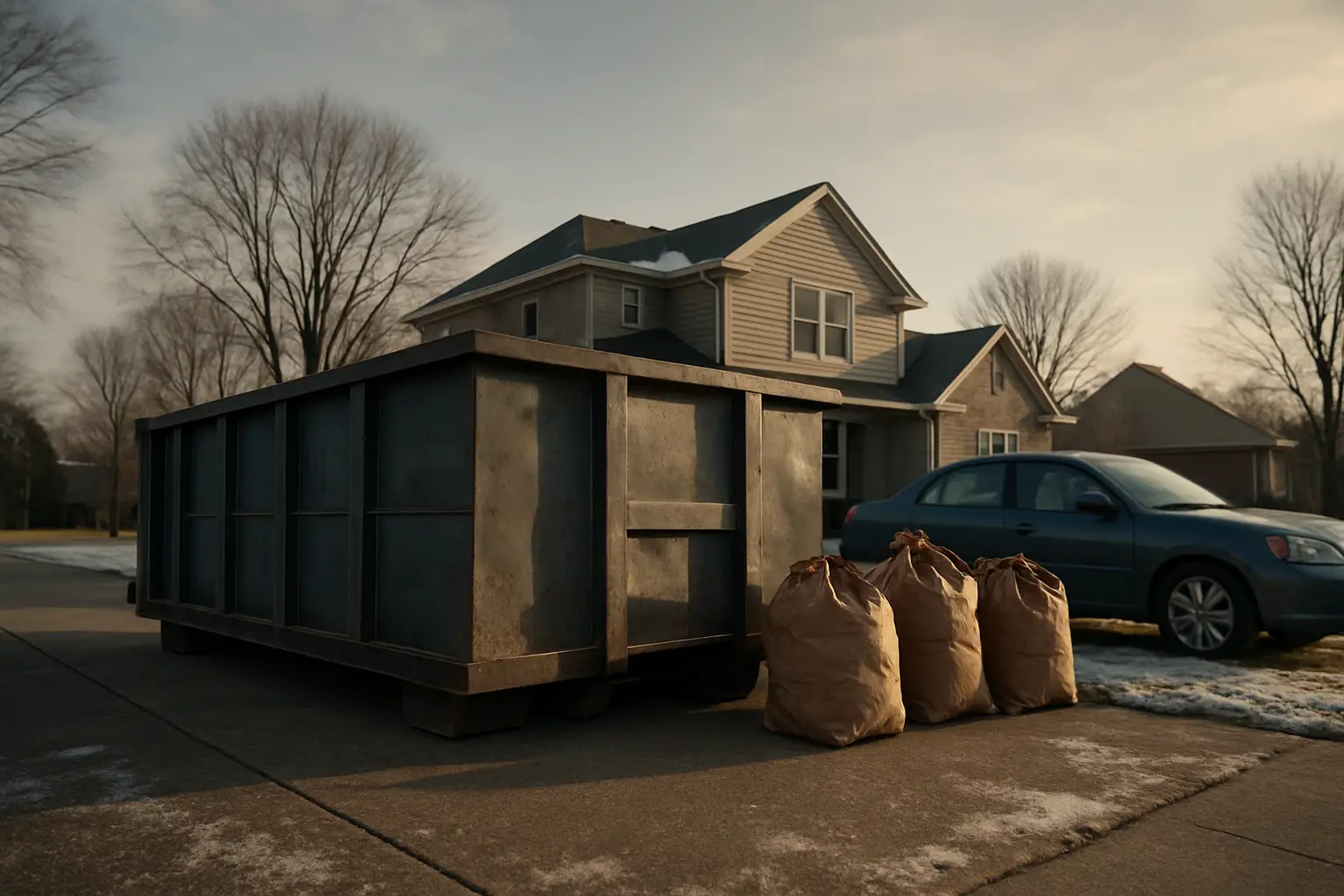
Plan the Kalkaska delivery around the property
Have the project address, debris type, preferred placement area, driveway conditions, and any access restrictions ready when you call. Kirstyn Dumpster Rental can then discuss the container size and what needs to be confirmed before scheduling.
Click Here to Call(989) 279-3276Local delivery area
Dumpster service follows Kalkaska access conditions
Kirstyn Dumpster Rental handles deliveries throughout Kalkaska, including established residential streets, seasonal cabin areas, commercial corridors, and properties reached by rural lanes. The practical question is not only the address, but where the container can sit without blocking traffic, damaging soft ground, or preventing pickup. Tell us the nearest cross street, driveway surface, slope, and project material so the delivery plan fits the property. Availability is 24/7, Monday to Sunday, with scheduling based on the site details and container choice.